Ostowana Releases · November 2026
Omary’s Tourat Brings Moroccan Heritage Into Afro House
Moroccan DJ and producer Omary released Tourat on Ostowana on 23 October 2026. Across 12 tracks, the album brings Afro House and electronic production into conversation with the voices, instruments and traditions that shaped him growing up.
The title means “heritage” in Arabic. For Omary, that heritage is both personal and shared: childhood memories of Moroccan celebrations sit alongside collaborations with musicians whose work carries beldi, Gnaoua, Amazigh, Aïta and Arabic musical traditions. The record treats those sounds as central voices in the music, giving them space within its percussion-led electronic arrangements.
An album built through encounters
The opening track begins with the ghaïta, an instrument Omary associates with gatherings and memories of home. Its sound returns on “Meknes”, produced with Souhail Artwork. “Kwawni” brings singer and oud player Khalid Elhamri into a tribute to the beldi music of Errachidia, while “Jilali” draws on Gnaoua music with DJ Medi and vocalist Nourani.
Elsewhere, Yasser Radif’s voice, ney and symphonic arrangements give “Orient Spirit” its connection to Arabic tarab. On “Qissat Mra”, Iris Bloom’s voice and the qanun bring another traditional timbre into the album. “Awtil”, featuring Aziz Ozouss, brings Amazigh influences and the sounds of ribab and taloutart into an Afro House setting. “Moussem” and “Moulay Abdellah” turn toward Aïta, with violin and vocals contributing to the album’s regional character.
The project also reaches beyond Morocco. Created with Amine’O, “Horasan” reflects a Turkish influence and the idea that heritage can grow through the music and people encountered along the way.
The personal story at the centre
“Diwane” gives the album its most intimate moment. Omary’s father, Abdo, sings about his son and what he hopes to express through the record, accompanied by Salah Fafah on violin. Their collaboration makes the theme of transmission tangible: music passed between generations, then transformed into a new work.
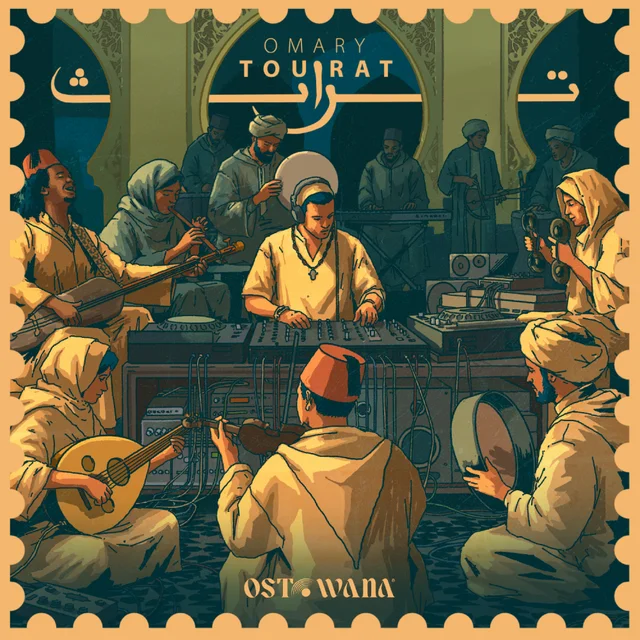
That idea also shapes the album cover. Moroccan artist Ed Oner places Omary at an electronic setup surrounded by musicians and traditional instruments. The artwork presents the record as a collective musical gathering rather than a meeting of separate worlds.
Tourat closes with “Marsaoui”, created with multi-instrumentalist Lotfi E. Its blend of saxophone, symphonic arrangements and electronic production gives the album a sense of motion beyond its final track.
Source: Official announcement ↗